Nobody opens a breathing app because they want a technique. They open it because they feel one way and want to feel another, usually in the next two minutes, usually right before something that matters. I kept that idea in front of me the whole time I built 1Breath, because almost every breathwork app on the store gets it backwards.
1Breath and Get1Min are the two apps I have shipped for the part of the AscenHD mission people forget. Perform at a higher level, in work and in life. Most of what we build for work is invisible infrastructure you never see. These two are the half you can hold in your hand, and they come from the same bet: that performance compounds from the smallest rep you will actually repeat. For breathing, that is one breath. For training, one minute. I built each app around its unit and fought to keep everything else out.
1Breath: a state change, not a technique list
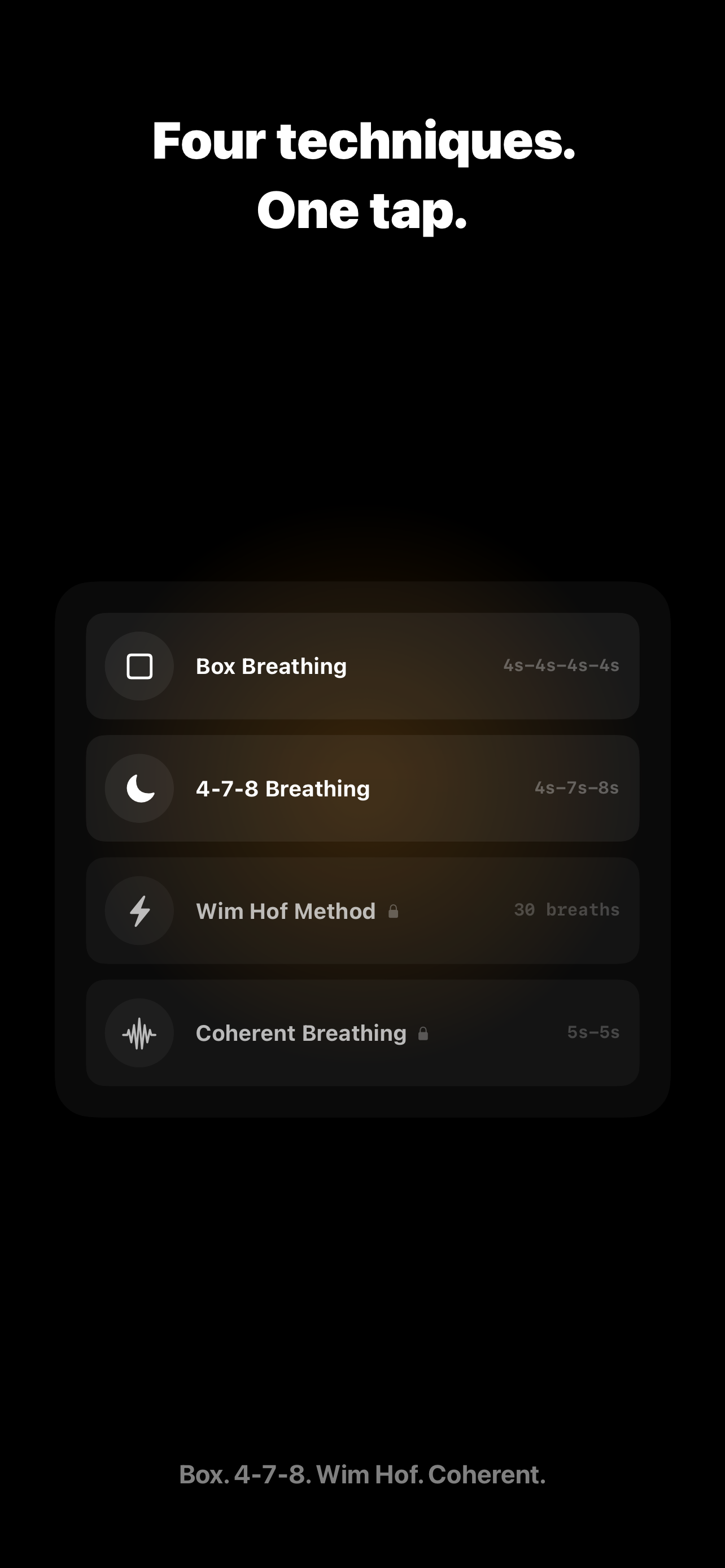
The default design for a breathwork app is a library. Box breathing here, four-seven-eight there, a shelf of named patterns you are left to sort out alone. That is the choice I refused. A library makes the user do the translation from how they feel to which technique fixes it, and that translation is the entire job.
So 1Breath is organized around seven designed state transitions I call Arcs: Come Online, Reset, Calm, Lock In, Before the Shot, Wind Down, Recover, plus an instant Right Now section for when you cannot wait. You do not pick a pattern. You pick where you are and where you want to be, and the app runs the three-phase arc that moves you there. The breathing science is the same as everyone else's. The framing is the product.
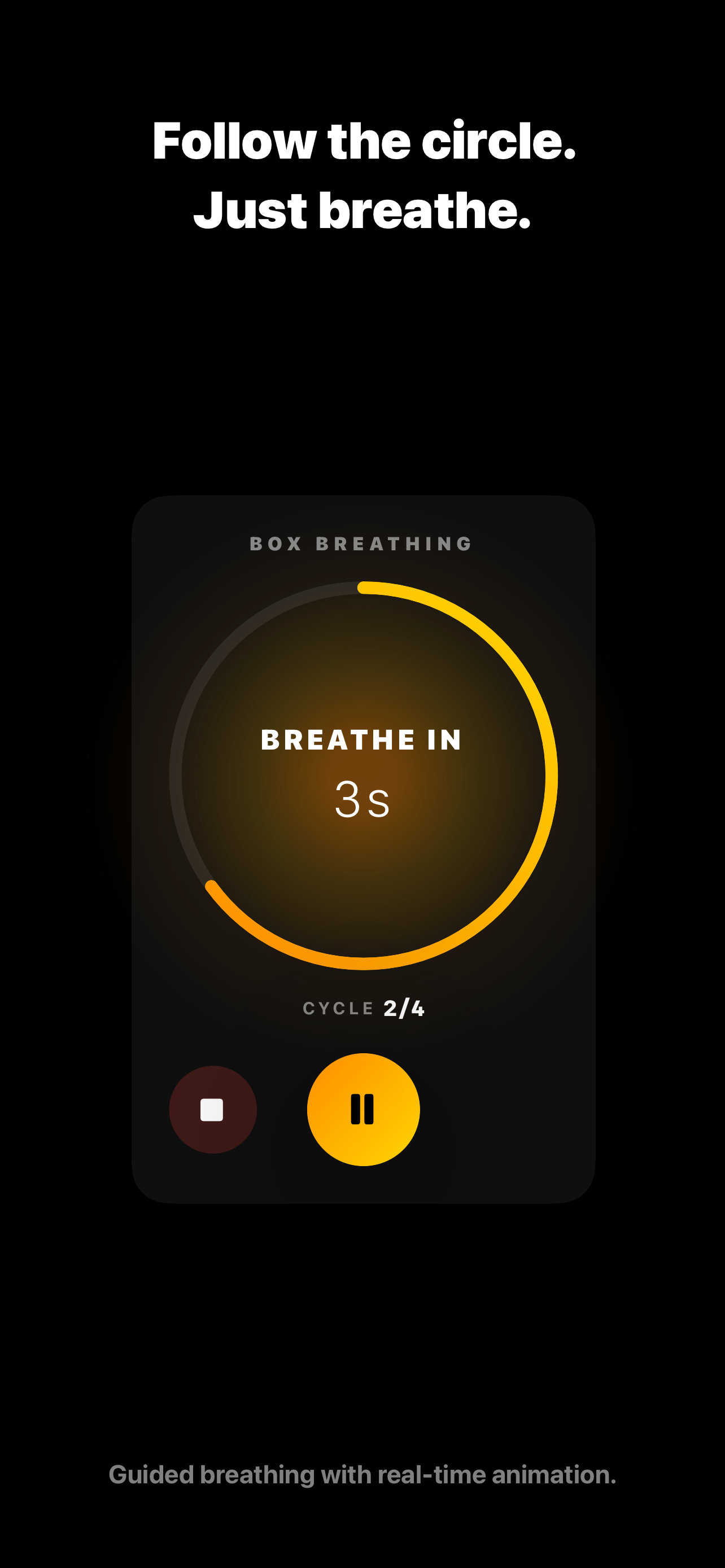
Underneath, a real-time animated ring drives the pace and stays locked to haptic guidance, so you can run a full session with the phone face down and your eyes closed. Siri Shortcuts, a Widget, and a Live Activity make it a one-tap start. The hardest engineering was not the breathing math. It was the restraint to ship seven arcs instead of seventy patterns.
Get1Min: the smallest unit that still counts
Get1Min came from a different frustration with the same shape. Training apps do not fail you on the workouts. They fail you on friction. Forty-minute plans, gear, a slot in the calendar. Miss two days and the streak feels dead, so you quit and the app joins the graveyard on page three of your home screen.
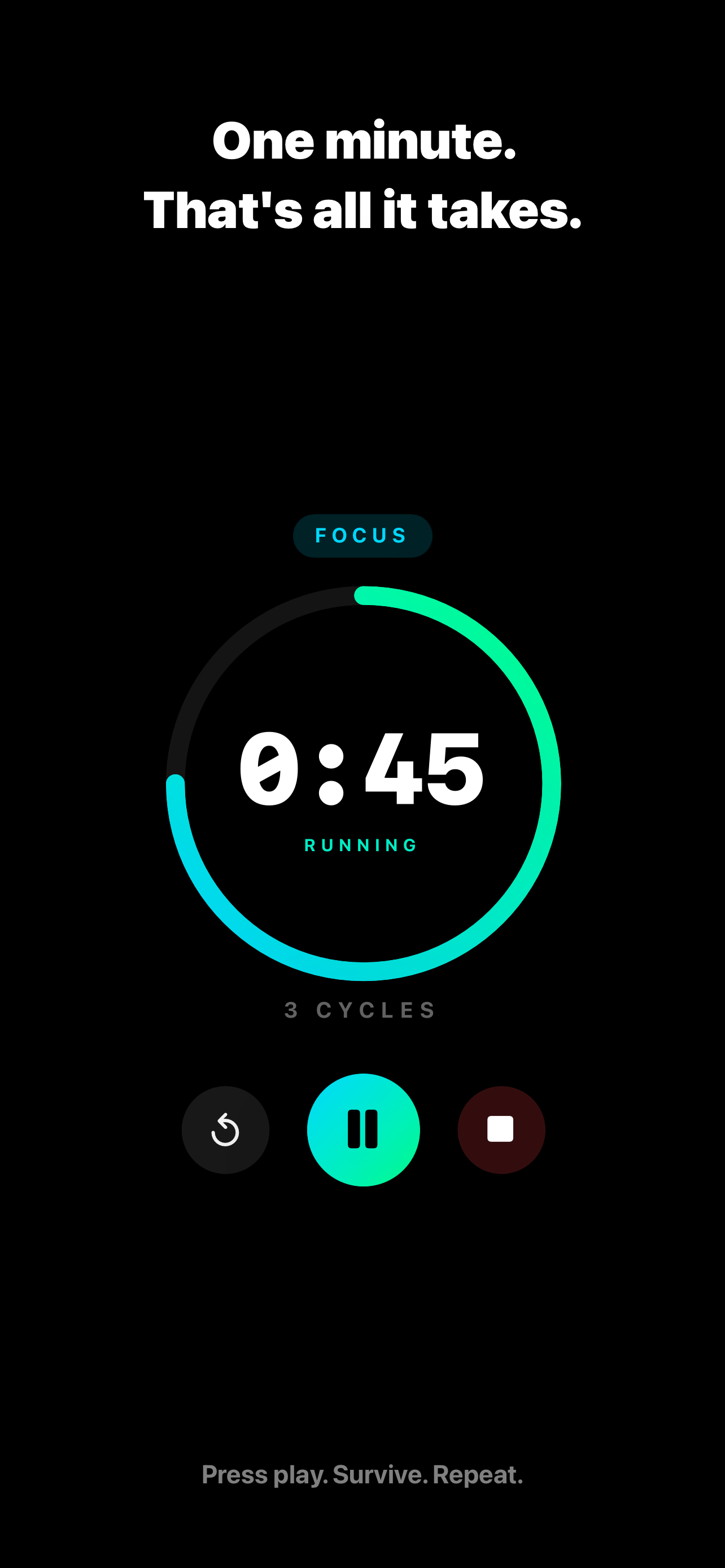
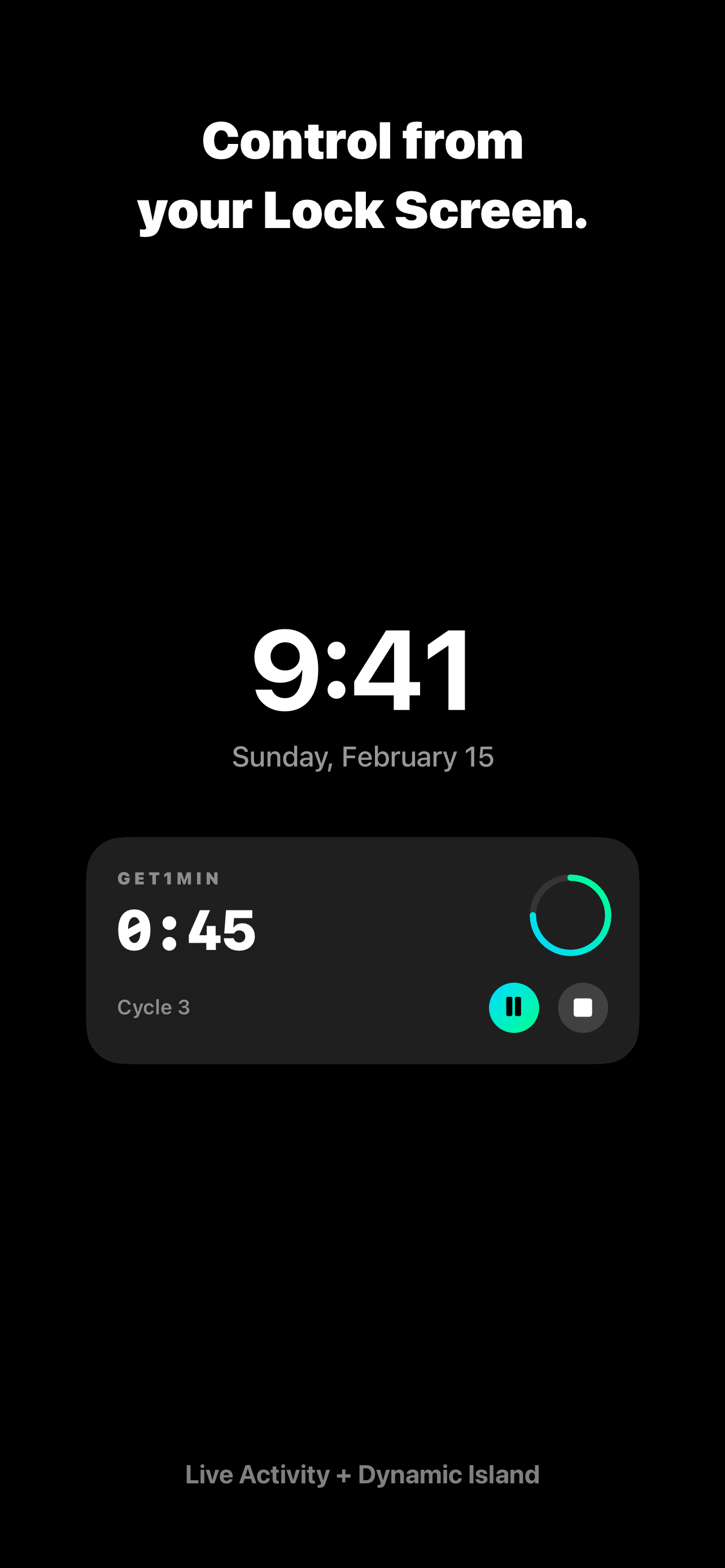
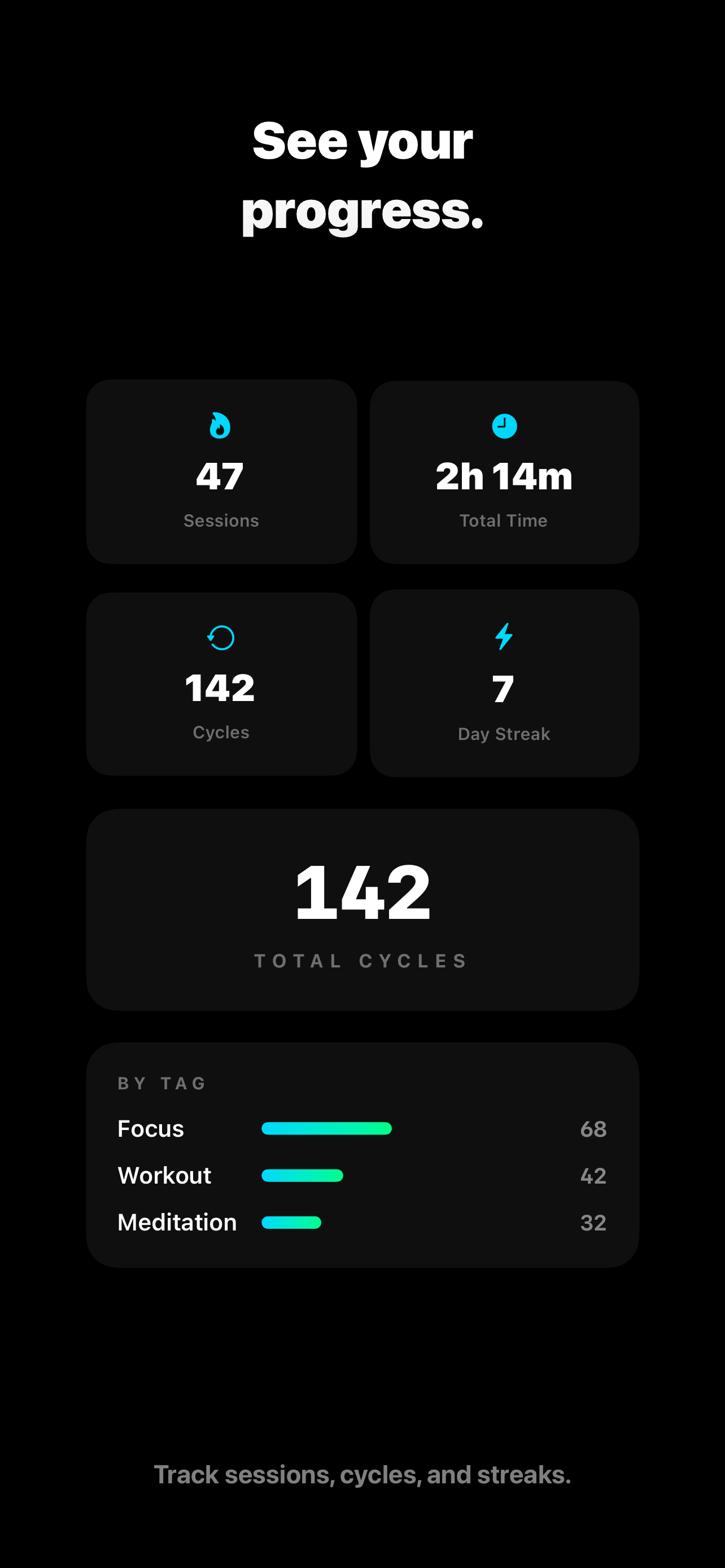
Get1Min strips that to one minute, and the constraint is the whole point. A minute is too short to talk yourself out of and long enough that it still counts. The intervals run live in the Dynamic Island and on the Lock Screen, so the session leaves the app and rides along with the rest of your day. Press play, survive, repeat. The log keeps the streak honest without turning it into a second job.
The engine room
Here is the part most app write-ups skip. I build these alone. No team, no studio behind the curtain. The way that math works is by treating the hard parts as engines, not features. 1Breath runs on a reusable Swift package I wrote called CoreBreathKit, which owns the breathing logic, the phase timing, and the haptic sync. The app on top of it is mostly presentation. Pull the engine out as its own thing and the next idea that needs paced, haptic-driven timing starts much further down the road.
That is the operating model behind AscenHD, in one small example. Build the durable piece once, reuse it, keep the surface area small and fast. The deep OS integration is the other half of it. Live Activities, the Dynamic Island, Shortcuts, haptics. For a one-tap app those are not garnish. They are how a small thing earns a permanent place on someone's phone, because they let the work leave the screen.
And yes, I build AI-native, which is how one person ships at this pace at all. But neither app is about AI, and I would never sell them that way. AI is the method, never the point. I wrote a separate piece on what I actually point AI at, using AI Daylee as the example. These two apps are the same argument in physical form, and the rest of the ecosystem runs on the same playbook.
Why the small stuff is the mission
Building both apps back to back taught me the same lesson twice. The hardest design work is subtraction. Anyone can add a feature. Deciding that one breath, or one minute, is enough takes more conviction than piling on options, and it is the decision the user feels every single time they open the thing.
Neither of these is finished. They are early, and I will keep changing them based on how people actually use them, not how I imagined they would. That part of the job is the same whether the work is a breathing app or a regulated-grade system. We run our own ventures so the proof is real and on the record. Both apps are live on the App Store today, free to try. No deck, no promise, just the thing itself. Perform at a higher level, in life as much as in work, one breath and one minute at a time.
Building something small and real?
AscenHD builds and ships products end to end, and runs its own as the proof. If you have an idea that deserves to exist, let's talk.
Start a conversation →Brian Kolowitz
Founder, AscenHD
Founder of AscenHD, building products, platforms, and the ventures that prove them out. D.Sc. Faculty at Carnegie Mellon.